-
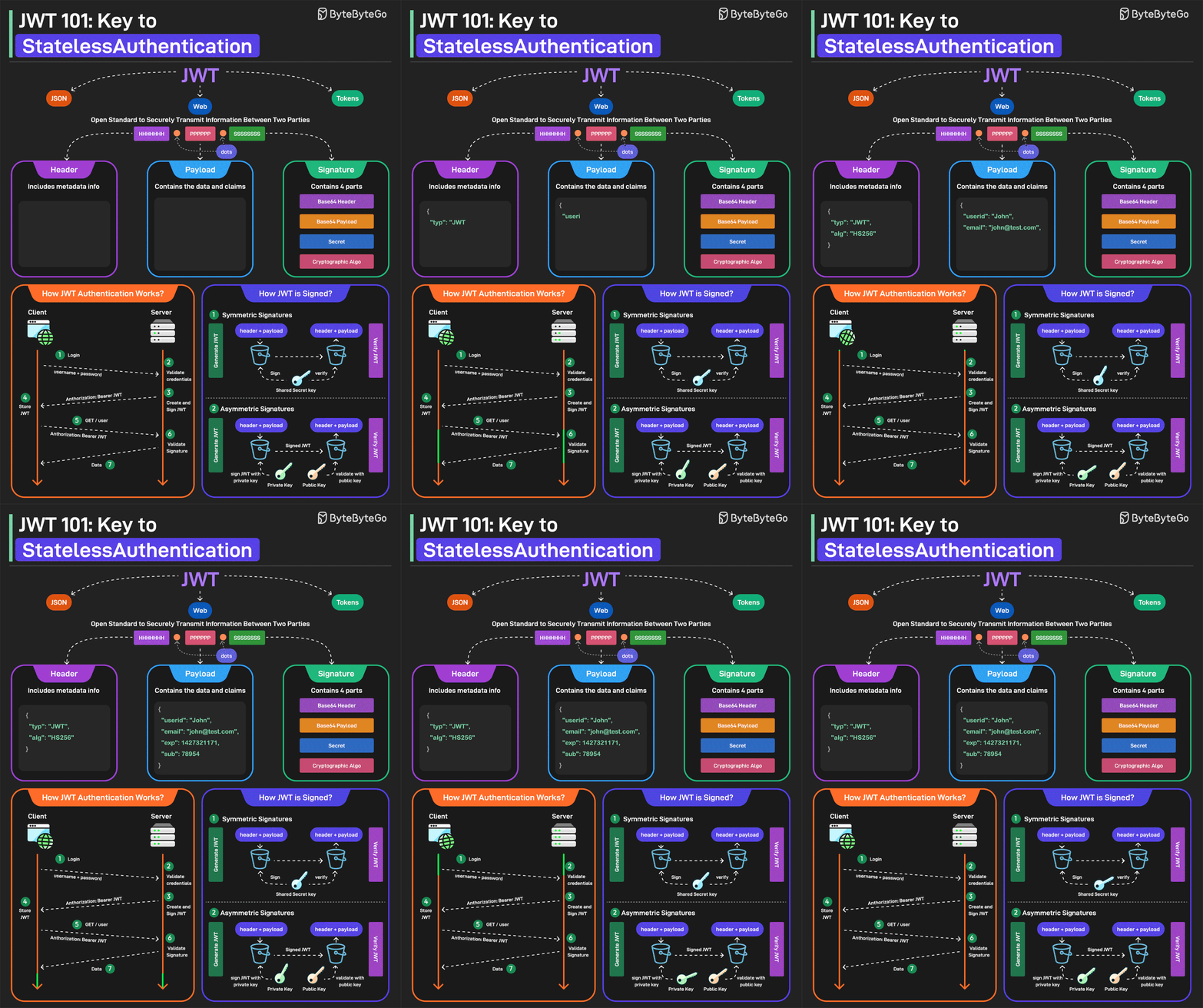
JWT or JSON Web Tokens is an open standard for securely transmitting information between two parties. They are widely used for authentication and authorization.
-
A JWT consists of three main components:
- Header - Every JWT carries a header specifying the algorithms for signing the JWT. It’s written in JSON format.
- Payload - The payload consists of the claims and the user data. There are different types of claims such as registered, public, and private claims.
- Signature - The signature is what makes the JWT secure. It is created by taking the encoded header, encoded payload, secret key, and the algorithm and signing it.
-
JWTs can be signed in two different ways:
- Symmetric Signatures - It uses a single secret key for both signing the token and verifying it. The same key must be shared between the server that signs the JWT and the system that verifies it.
- Asymmetric Signatures - In this case, a private key is used to sign the token, and a public key to verify it. The private key is kept secure on the server, while the public key can be distributed to anyone who needs to verify the token.