We worked on a federated learning-based heart disease detection system using Python. The goal was to create a machine-learning model that predicts heart disease while ensuring patient data privacy. The project utilized Horizontal Federated Learning (HFL) and a Random Forest classifier to enable multiple hospitals to collaboratively train a model without sharing sensitive data.
1. Dataset Preparation
- Used a heart disease dataset with 1,190 patient records from five hospitals.

- Preprocessing: Removed outliers using Z-score normalization and handled missing values.

- Data Partitioning: Divided data across multiple clients (hospitals) to simulate decentralized data storage.
2. Model Development
- Algorithm: Implemented Random Forest, which is robust against overfitting and performs well with tabular medical data.

- Federated Learning Approach:

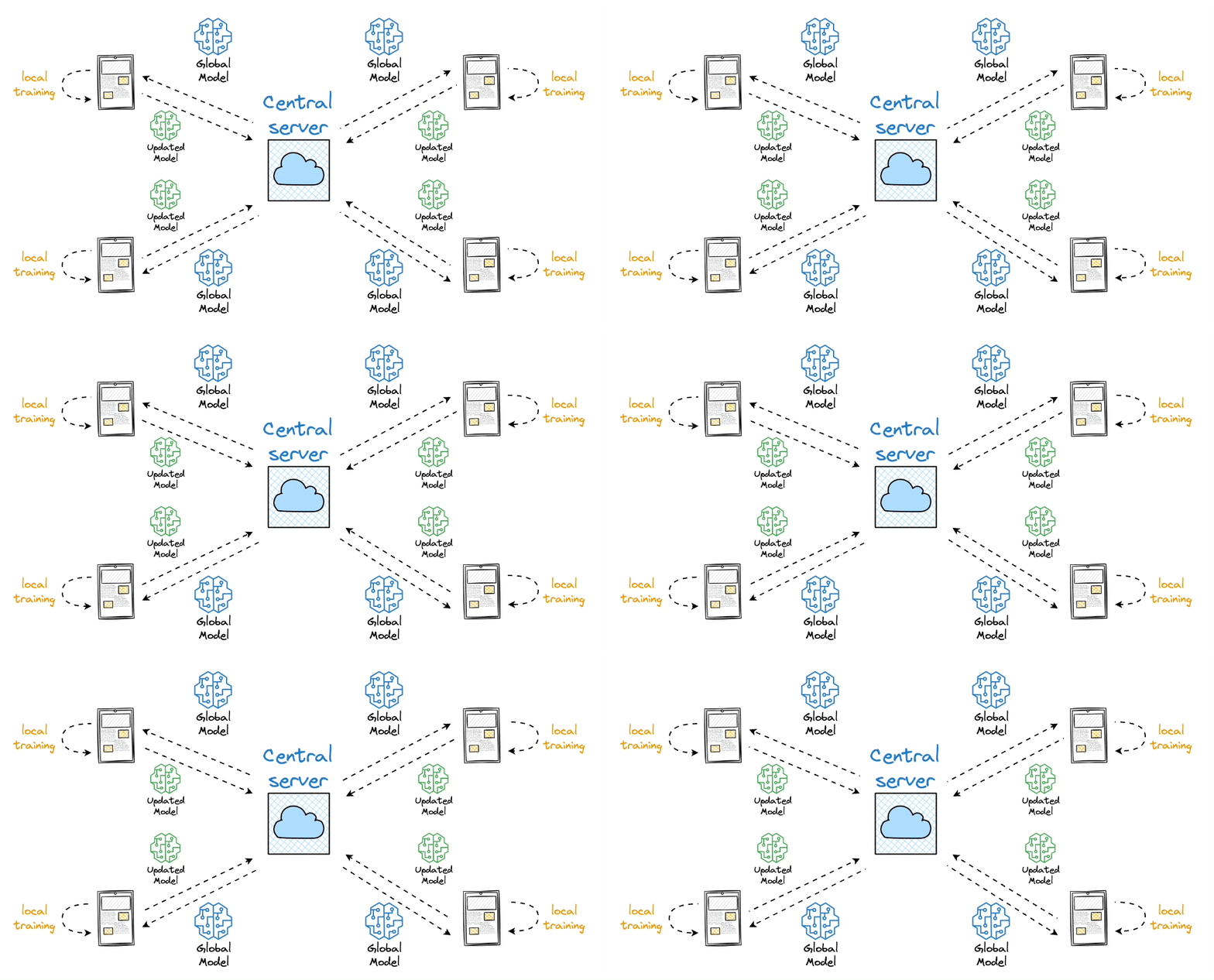
    - A global model was trained on a central federated server.

    - The model was distributed to local hospital clients, where it was trained on their private data.

    - Clients sent back only the model parameters (not raw data) to update the global model.

- Helper Functions: Developed Python functions to filter and aggregate non-repetitive model parameters from clients.
3. Hyperparameter Tuning
- Used Grid Search to optimize parameters like the number of decision trees (estimators) and depth of the Random Forest model.

- Evaluated performance using Accuracy, Precision, Recall, and F1-score metrics.
4. Experimental Evaluation & Results
- Conducted experiments in two phases:

    1. Initial model training and parameter exchange between clients and the central server.

    2. Retraining with additional data to enhance model accuracy.

- Achieved 92.41% accuracy after iterative training, improving performance over standalone hospital models.
Key Takeaways
Data Privacy: Patients’ data remained local, ensuring compliance with regulations like GDPR.
Federated Learning Efficiency: Model performance improved with each iteration without requiring centralized data collection.
Scalability: This approach can be extended to other diseases and healthcare applications.